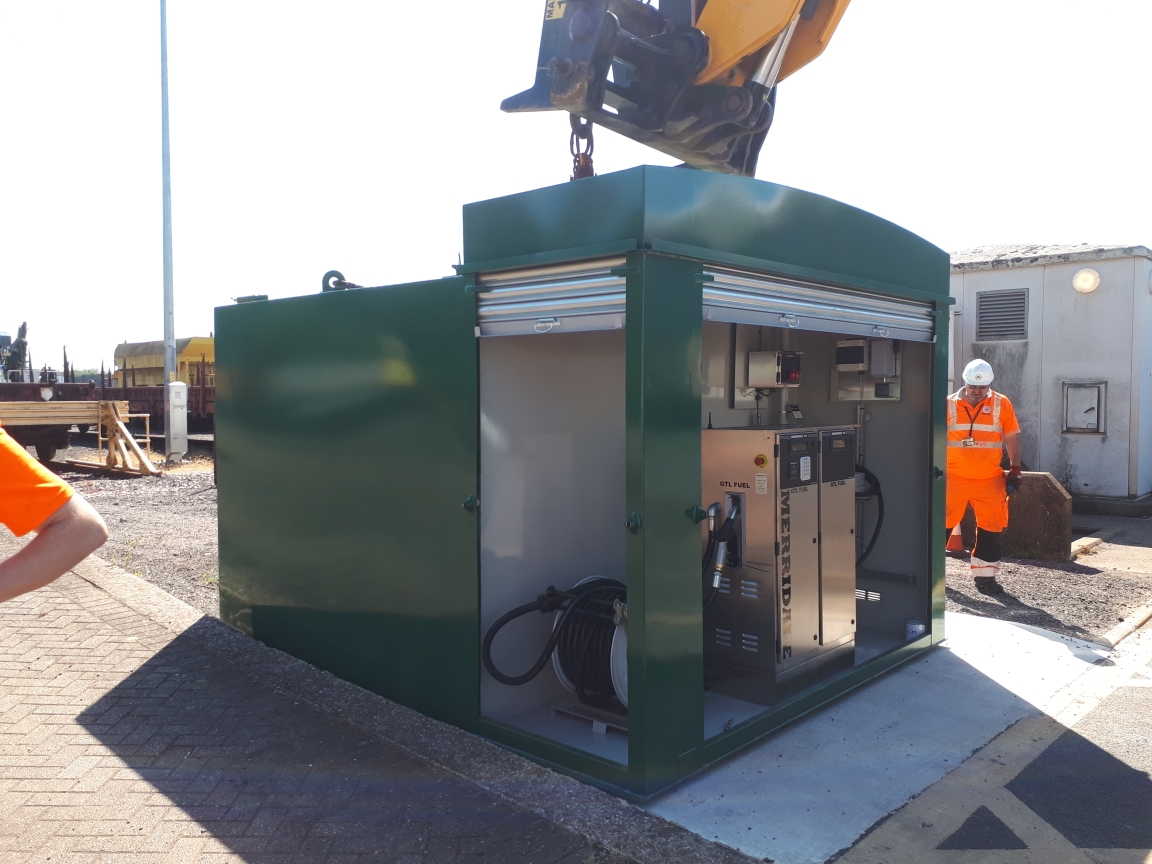
When commercial depot fuelling facilities were first introduced, they were equipped with pump dispensers which had been developed originally to meet the requirements of service stations for private motorists. Performance and accuracy was taken for granted, for these pumps had been designed to meet the high standards required for retail sales.
However with the pressure to reduce costs for commercial installations, many fleet operators were persuaded to use alternative, cheaper solutions. Since the sole purpose was to transfer the fuel from the storage tank to the vehicle, many users were not so concerned about electronic displays, stock security or the significance of any variance in meter readings.
Pumps were seen as a commodity and purchase decisions were therefore mostly driven by price. In some cases, recycled pumps (with mechanical displays) were offered for use in commercial depot fuelling points.
Not surprisingly many of these installations fell below the expectations for performance and the accuracy demanded by the more discerning fleet operators – especially in the public sector; municipal authorities, police and emergency services.
Areas of concern
Durability
Whilst a service life in excess of 20 years was the norm with the early generation ‘retail’ pumps, the basic pumping capabilities and motor performance of commercial equipment today falls woefully below these standards. Inevitably this has resulted in poor reliability which puts the productivity of the fleet and the operator’s customer service at risk.
Fleet operators should consider their operational requirements when specifying depot fuelling to ensure that they achieve a service capability that is commensurate with the size and scope of the fleet to be fuelled. After all, no haulier would expect a fleet of light vans to carry out heavy haulage on a sustainable basis. Likewise low cost light duty fuel pumps are not going to deliver the on-going reliability required by a fleet of heavy goods vehicles.
Speed
Far too much emphasis is being placed on pump delivery speed. Whilst it may be desirable to quickly fill the large tanks fitted of an HGV, the high flow nozzle type is not compatible with cars and vans. It may be better to accept either a compromise fuel pump of approx 70 LPM which can be used with light vehicles. Better still is to consider the dual hose option which provides a high flow outlet with larger nozzle from one side and a standard flow output with a slim line type nozzle on the other side.
Accuracy
Potentially this is the most crucial aspect in today’s world of measurement and accountability. Many fleet operators are demanding, quite rightfully, that their fuel usage data is as accurate as possible. This is especially true of public sector services where the transparency of their accounts and operating costs is a cardinal requirement.
Despite this obligation, there are many examples where these organisations are installing inferior quality pumps that provide accuracies of no better than one percent, even when new, and before any wear. The design is inferior because they have no air separation and consequently accuracy rates will vary with the delivery flow rate. These basic pumps are fit only for low throughput applications such as small farms or wherever operator demands are not so stringent.
A professional standard pump should achieve a consistent accuracy of +/- 0.25 percent, which is generally accepted for in-house accounting. Where trading standards apply, for resale, then the equipment must meet this standard and be certified accordingly. This performance standard is achieved because these pumps employ high quality positive displacement piston meters and air separation.
Fuel Management
Fleet operators today usually employ some form of fuel management system, to protect their stock and ensure that fuel usage is monitored properly. All fuelling transactions are recorded automatically and the software acquires important statistical data which can be processed to provide a detailed analysis of fleet consumption and economy performance.
Although the interface requirements are fairly straightforward, we are constantly seeing new storage tanks being fitted with pumps that do not lend themselves easily to the connection of fuel management systems. In some cases the modification required is quite expensive and data accuracy can also be compromised.
Fortunately the major Ad-Blue tank suppliers have got the message and most new packs come with fuel management interface as standard. We live in hope that the suppliers of diesel/gas oil storage tanks - which are still omitting this feature - will wake up and get with the programme.